
It may look like hugging, and fighters are known to hug after a fight as a show of respect or sportsmanship, but during the fight it’s tactical and is known as clinching. It’s a useful defensive technique used for a number of reasons.
If it’s excessive the referee may break the boxers up, and sometimes give warnings to prevent it. It may be instigated by one or both boxers, but clinching is a common practice.
Clinching for rest or recover
Especially in the later rounds, a tired boxer may buy themselves some time to catch their breath by clinching the opponent – putting their head on the shoulder / collar bone of the opponent and wrapping or tying up their hands. How quickly the opponent tries to get out of the clinch will depend on their own energy levels, or their own tactics.
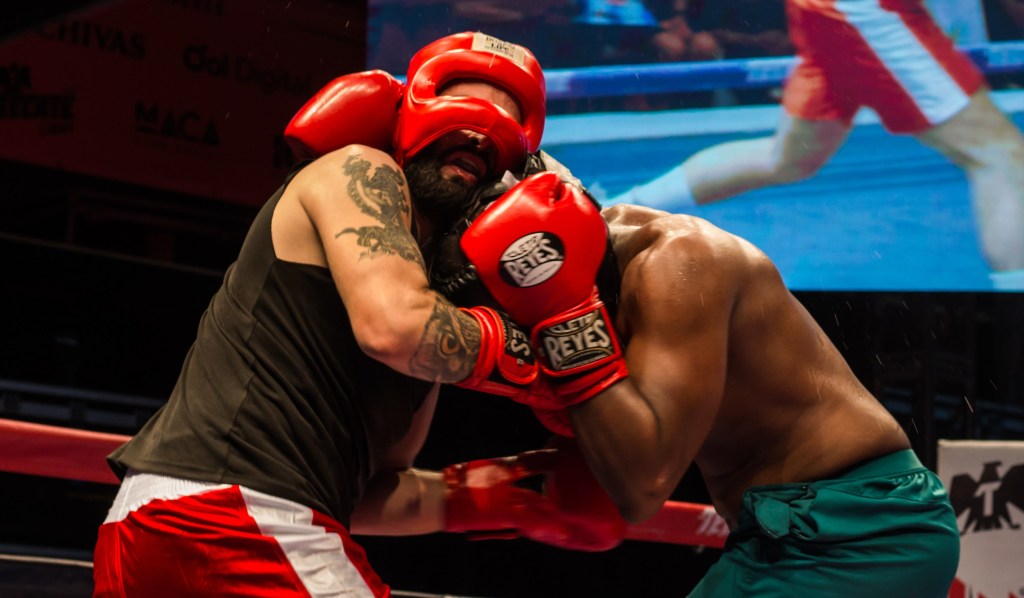
A clinch might also be timed for after a boxer has completed an interval of heavy offensive work, and wants to prevent retaliation, whilst also recharging for another attack, or for the bell to end the round.
Clinching is often the recommended course of action for a fighter who has been stunned, recently knocked down, or generally wobbled by an opponent. They may be able to prevent further attack while they are most vulnerable, and have extra time to recover.
Clinching to stop the opponent’s attack
It can disrupt the timing of the opponent if they are clinched or tied up. If a boxer is cornered or being beaten, clinching is sometimes used to get out of the bad spot. A well timed clinch can frustrate an opponent and prevent combinations, and lessen the power of the attacker’s punches. If one boxer is better at close range fighting, the other may be more likely to clinch when fighting on the inside, to prevent getting hit, and wait to be separated by the referee.
Clinching to drain energy
This is especially true if the opponent is less tall or lighter. A fighter may lean their head and bodyweight into the opponent. Tying up the arms means the opponent needs to use energy to free them.
Getting out of a clinch can be risky, one fighter might gain the advantage while the other is unguarded, so fighters often wait for the referee to break them and they are required to take a step back.
 Boxing Unboxed